Best Tire Inflators for Cars Portable Air Compressor Review Guide for 2026
Car accessories
|
March 21, 2026
A flat tire at 11pm on a dark road changes your opinion about portable air compressors permanently. Carrying a reliable tire inflator means the difference between a five-minute fix and waiting two hours for roadside assistance.
Portable air compressors have improved dramatically in the past two years. Cordless models now match corded performance, digital pressure readings have become standard, and auto-shutoff features prevent dangerous overinflation. These reviews cover what actually matters when picking one.
Fanttik T8 Apex: Best Overall Portable Tire Inflator
The Fanttik T8 Apex costs $100 and has quietly become the recommendation that tire inflation reviewers keep returning to in 2026. Its brushless motor inflates a standard passenger car tire from 20 PSI to 35 PSI in approximately 90 seconds, which is genuinely fast for a cordless unit drawing from a built-in 7,800mAh battery.
The digital display reads pressure in PSI, BAR, KPA, and KG/CM2 with accuracy rated at plus or minus 0.5 PSI. That half-PSI accuracy rating outperforms most competitors at twice the price. The auto-shutoff engages reliably at preset pressure without the pressure spike and correction cycle that plagues cheaper units.
Build quality feels immediately different from budget options. The housing uses reinforced polymer that resists drops and the hose connection feels solid rather than plasticky. One reasonable complaint is that the carrying case adds bulk, though the case itself is well-designed for trunk storage.
Ryobi PCL545K1: Best for Existing Ryobi Battery Users
If you already own Ryobi ONE+ batteries from other tools, the Ryobi PCL545K1 cordless inflator costs $79 as a bare tool and becomes exceptional value. Compatible with all 18V ONE+ batteries, it delivers inflation performance nearly identical to the Fanttik T8 Apex using batteries you already own and charge.
The digital display includes a backlit screen readable in direct sunlight and complete darkness equally well. Preset pressure memory stores your most commonly used values, eliminating the need to reset target pressure each use. For a household already invested in Ryobi tools, this portable air compressor makes obvious financial sense.
Without an existing battery, the kit version including one 2.0Ah battery and charger costs $129. That pricing makes it less competitive against the Fanttik for buyers starting fresh, though Ryobi's wider ecosystem adds long-term value worth considering.
Viair 85P: Best Corded Option for Consistent Power
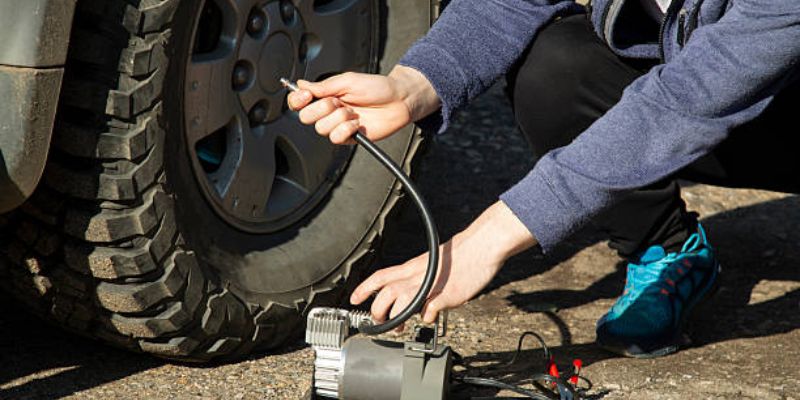
Cordless portable air compressors excel at convenience but corded models deliver sustained power that battery units cannot match over multiple consecutive tire inflations. The Viair 85P costs $48 and connects to your 12V cigarette lighter outlet, drawing consistent power regardless of how many tires you've already inflated.
Inflating a completely flat tire from 0 PSI to 35 PSI takes the Viair 85P approximately four minutes, which is slower than premium cordless units but faster than most comparable corded competitors. The 10-foot power cord and 16-inch air hose together provide enough reach to access all four tires without repositioning your vehicle.
The analog pressure gauge reads acceptably well at plus or minus 2 PSI. Not as accurate as digital units but sufficient for maintaining rather than precisely setting tire pressure. For keeping in a car as emergency backup rather than regular maintenance use, this tire inflator offers reliable performance at a price that removes hesitation.
DEWALT DXCM036 Cordless: Best for Heavy-Duty Use
The DEWALT DXCM036 costs $169 and operates on 20V MAX batteries from DEWALT's extensive tool ecosystem. What separates this portable air compressor from lighter options is its ability to handle truck tires, SUV tires, and even light truck applications without overheating during extended inflation cycles.
The thermal protection system shuts the motor down before damage occurs during sustained use, then allows restart after a two-minute cooling period. Budget inflators lack this protection entirely and simply burn out motors when pushed beyond their comfortable operating range on larger tire volumes.
Digital pressure accuracy rates at plus or minus 1 PSI with auto-shutoff that engages cleanly at target pressure. The LED work light illuminates valve stems in darkness, which sounds minor until you're crouched next to a rear tire at midnight trying to connect a hose by feel alone.
Avid Power Tire Inflator: Best Budget Cordless Pick
At $55, the Avid Power cordless tire inflator represents the most accessible entry point into genuinely useful cordless performance. Its built-in 6,000mAh battery inflates approximately three standard passenger tires per charge, which handles most roadside emergency scenarios without requiring a wall outlet nearby.
Inflation speed from 20 PSI to 35 PSI takes about two minutes, slower than premium options but acceptable for occasional emergency use. The digital display reads accurately within plus or minus 1.5 PSI, which sits at the acceptable boundary for practical tire pressure management.
The auto-shutoff works consistently through multiple inflation cycles without pressure spike issues. One genuine limitation is that the motor audibly struggles on larger SUV tires above 45 PSI maximum working pressure. Strictly use this portable air compressor[1] for standard passenger vehicles rather than trucks or performance tires requiring higher pressures.
Slime 40047 Pro Power: Best for Simultaneous Flat Repair
The Slime 40047 Pro Power distinguishes itself by combining a 12V corded tire inflator with an integrated flat tire sealant delivery system. At $60, it handles both inflation and emergency puncture sealing in one unit. For drivers who want maximum emergency preparedness without carrying separate products, this combination makes practical sense.
The sealant function injects Slime tire sealant through the valve stem while simultaneously inflating, handling punctures up to 3/8 inch diameter. This covers the vast majority of nail and screw punctures that cause slow leaks rather than sudden blowouts. The sealant is not a permanent repair but provides enough stability to reach a proper tire shop safely.
Inflation-only performance rates as average compared to dedicated inflators. The corded design limits convenience versus cordless options. Consider this specifically if your driving involves rural routes where puncture risk is high and tire shops are genuinely distant.
NOCO GB40 Jump Starter With Built-In Air Compressor: Best Two-in-One
The NOCO GB40 primarily functions as a lithium jump starter delivering 1,000 amps for dead battery situations, but its built-in air compressor adds tire inflation capability for $110 total. Getting both functions in one compact unit represents compelling value for emergency preparedness without trunk clutter.
The air compressor component inflates tires to maximum 100 PSI with a digital gauge accurate to plus or minus 2 PSI. Performance is slower than dedicated tire inflators, taking approximately three minutes from 20 PSI to 35 PSI on a standard passenger tire. The jump starting capability justifies accepting that performance compromise for most drivers.
Battery capacity serves both functions from a shared 6,000mAh lithium battery. Heavy use of the compressor reduces jump starting reserve, so prioritize jump starting capability if both needs arise simultaneously. Keep this unit charged monthly since lithium batteries self-discharge slowly over time.
What Specifications Actually Matter When Comparing
Maximum PSI rating determines compatibility with your tire type. Standard passenger car tires require 32 to 44 PSI. Performance tires sometimes need 50 PSI. Truck and SUV tires range from 35 to 80 PSI. Select a portable air compressor rated at least 20% above your maximum required pressure to maintain adequate airflow near target pressure.
CFM rating measures airflow volume rather than pressure capacity. Higher CFM means faster inflation on larger tire volumes. Most passenger car applications perform adequately at 1.0 to 1.5 CFM. Truck tire applications benefit from units delivering 2.0 CFM or higher to maintain reasonable inflation times on high-volume tires.
Motor duty cycle indicates how long continuous operation remains safe before required rest periods. A 35% duty cycle means 21 minutes of operation per hour maximum. Full-size truck owners inflating four large tires consecutively need units with duty cycles of 50% or higher to avoid motor damage during single-session full-vehicle inflation.
Pressure Accuracy Testing at Home
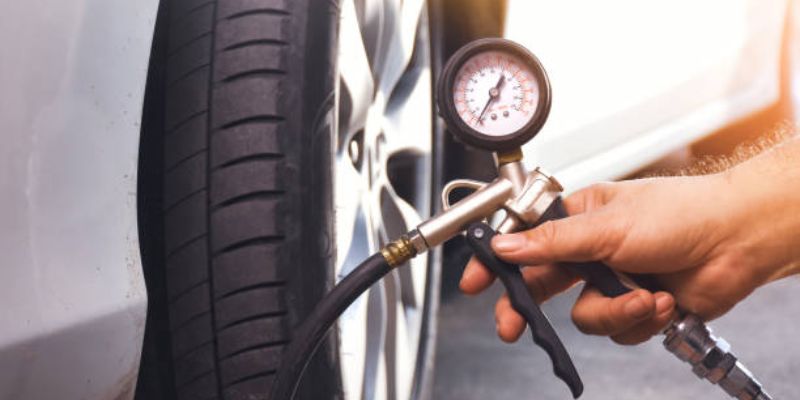
Verify your portable air compressor's accuracy against a trusted reference before depending on it in emergencies. Tire pressure gauges[2] calibrated to NIST standards cost approximately $15 and provide reliable reference readings. Connect your inflator, inflate to a specific target, then measure immediately with the reference gauge before any air bleeds from the connection.
Record the difference between your inflator's reading and the reference gauge reading. If the difference exceeds 2 PSI consistently, factor that offset into your target pressure settings. A unit reading 2 PSI high should be set to 30 PSI when your actual target is 32 PSI.
Test accuracy across multiple pressure points since some units are accurate at lower pressures but drift at higher ones. A unit reading correctly at 30 PSI but running 3 PSI high at 45 PSI creates dangerous overinflation if you maintain performance tires or truck tires without checking the calibration offset first.
Picking the Right Portable Air Compressor for Your Situation
Regular commuters who want cordless convenience and strong accuracy should spend $80 to $100 on the Fanttik T8 Apex or the Ryobi PCL545K1 if already in the Ryobi ecosystem. Budget-focused buyers getting their first portable air compressor will find the Avid Power at $55 handles passenger car tires reliably without significant compromise.
Drivers covering rural routes where both flat tires and dead batteries represent real risks get maximum emergency value from the NOCO GB40 at $110. Truck owners and heavy-duty users should invest in the DEWALT DXCM036 at $169 to access the motor capacity and thermal protection that standard consumer units lack on larger tire volumes.
Keep your tire inflator charged, stored in an accessible trunk location, and tested every three months. An inflator whose battery died six months ago helps nobody on a dark roadside at midnight. Reliable preparation means the tool works the moment you actually need it.
References
[1] U.S. Department of Energy – https://www.energy.gov
[2] Consumer Reports – https://www.consumerreports.org
Related Posts
OBD2 Scanners Explained How To Diagnose Your Car Using Your Phone

13 Best Accessories to Survive Long Traffic Hours Without Losing Your Mind

Best New Cars for Daily Driving in 2026 Maximum Comfort, Minimum Fuel Costs
Luxury Looks, Affordable Price The Best New Cars You'll Love Driving in 2026
The Most Futuristic Cars You'll See in the Next 2 Years Real Vehicles, Not Concepts